
The Neurodivergent Psychologist who Diagnosed Everyone But Herself

A late-diagnosed AuDHD psychologist's plot twist.
I had been specializing in autism for years. Which is, genuinely, part of what made this so disorienting.
I'd done ABA early in my career — before I understood the harm — then trained in autism and ADHD assessments in grad school, and eventually built a whole career around it. Autism assessment across the lifespan. First with kids, then shifting toward adults. This wasn't a side interest. It was the thing. The thing I trained in, identified with professionally, was known for. And somewhere in the middle of all that, I started having these moments that didn't quite make sense.
I'd be sitting across from a client, listening to them describe their experience, and instead of just tracking it clinically — I'd think, oh. that's familiar. Not in a vague, "everyone relates a little" way. In a specific, slightly uncomfortable way. I'd catch myself saying things like "yeah, I can't imagine doing it the neurotypical way either," and sometimes, more bluntly, "honestly, fuck that." And then I'd catch myself and think — wait, why am I relating to this so much?
It didn't arrive as a single realization. No dramatic moment where everything clicked. It was slower than that, and honestly, more unsettling — cognitive dissonance building in the background while I kept showing up, kept functioning, kept being the person who was supposed to understand this in other people. Because how do you specialize in something for years and somehow miss it in yourself?
Easy, actually. You explain it away.
When I was working with kids, I'd have these small flashes of recognition and immediately file them somewhere else. Nah, my social anxiety is because of my hearing loss. Anxiety. Personality. Stress. Friend trauma. It was easy to rationalize because I'd always had explanations for my experiences — they just never fully captured what was going on. It wasn't until I started working more with adults that the moments stopped being occasional and started being harder to ignore.
One thing that cracked something open for me: learning about the difference between panic attacks and meltdowns. Panic attacks tend to peak fast — they come on quickly, crest, subside. Meltdowns build gradually as overwhelm accumulates. When I actually thought about my own experiences, they didn't feel sudden. They felt like something that had been quietly compressing for hours or days. That realization made me start questioning whether I'd been mislabeling my own internal experiences for most of my life. And once that question showed up, it didn't leave.
I remember going to my partner and saying, almost carefully, "what if I'm autistic too?" Even saying it out loud felt strange. The autistic people I'd grown up knowing were mostly men, mostly with more externally visible presentations. I didn't see myself reflected there, so even as the idea was forming, it felt uncertain. Like I was hovering at 95% sure but couldn't quite trust it.
What pushed me further was a series of conversations that made the pattern harder to dismiss.
I went to my mom and said, almost as a test, “Mom, I think I might have sensory issues." I'd started noticing that changing into comfortable clothes — jeans to sweatpants — made my whole body exhale. That being in heat felt like I was approaching panic, but the moment I got back into air conditioning I was completely fine. How I had caught several gas leaks over the years that no one else could smell. I was connecting dots I hadn't connected before. Her response was immediate and utterly casual: "Oh yeah, I know. We could barely dress you as a child."
That stopped me. Not because it was shocking to her. Because it was unremarkable to her. Something that felt like a major realization to me had been visible all along — just never named in a way that connected to anything.
Then I asked my dad. I'd been quietly wondering about him for a while, based on how he talked about the world and what he preferred. “Why would I ever leave the house?” “Ew, meeting new people.” “I can only wear this one type of shirt.” I asked him directly one day: "Do you think you could be autistic?" Without hesitation: "Oh yeah, of course." He talked about how he'd always felt that way, how many of his friends had been diagnosed with what was then called Asperger's, how it had never been a big deal to him. That widened everything. It wasn't just about me anymore — it was about seeing a pattern across generations. Strong autistic traits on one side of the family, clear AuDHD traits on the other.
Suddenly Autism for myself didn't feel far-fetched. It felt obvious.
Even then, imposter syndrome didn't evaporate just because the logic was there. I see this with clients all the time — the gap between intellectually understanding something and emotionally catching up to it. For a while, I'd tell people to keep a note on their phone of all the moments that clearly reflected their neurotype, so they could go back to it when doubt crept in. I needed that too. Because when you've spent your whole life being told you're something else, a new framework takes time to trust — even when it fits better.
What ultimately shifted things wasn't more information. It was an experience my body couldn't argue with.
I went to a neurodivergent retreat — a group of neurodivergent entrepreneurs — and it was the first time I'd ever been in a large group of people where my nervous system was just... calm. No performance monitoring running in the background. No constant adjustment. People were stimming, sitting on the floor during sessions, existing in ways that would've been considered unprofessional in every other space I'd been in. And I wasn't analyzing how to exist there. I was just there. It was mind blowing.
That feeling was so unfamiliar it was almost disorienting. In a good way. It was the kind of clarity that doesn't come from thinking — it comes from your body recognizing something as right. That was the moment it clicked in a way I couldn't rationalize around. Oh. This is what belonging feels like.
Even after that, there were still gaps. Autism explained so much — it gave me language for my sensory experiences, my social processing, the deep exhaustion of navigating environments that weren't built for me. But some pieces still didn't fit. I didn't just crave predictability — I also craved novelty. My interests weren't always sustained; they cycled, sometimes intensely, sometimes disappearing as fast as they arrived. My relationship with time was inconsistent at best, almost abstract. I -had- to write things down and cue myself for -everything otherwise I would undoubtedly forget. Often late, often overwhelmed, often holding myself to impossible standards all at once.
The ADHD recognition came later — which is actually the reverse of the more common pathway, where ADHD is identified first and autism surfaces afterwards. For me, autism was the lens that made my life make sense, and ADHD was what filled in the gaps that were still unexplained. Once I understood that these two neurotypes frequently co-occur — and that they can mask, compensate for, and sometimes outright contradict each other — years of internal confusion started to resolve.
ADHD involves an interest-based nervous system: driven by novelty, urgency, stimulation. Autism involves differences in sensory processing, pattern recognition, and a pull toward predictability and depth. When both are present, it doesn't cancel anything out — it makes the internal experience more complex. You can want structure and resist it simultaneously.
You can crave connection and need significant recovery after it. You can feel both overstimulated and understimulated in the same afternoon. From the outside, this looks inconsistent. From the inside, it feels like trying to hold two sets of real, valid, opposing needs at once. Understanding that was a relief. The parts of me that had always seemed contradictory weren't contradictions — they were context.
Looking back, masking is the thing I wish I'd understood sooner. For years, I didn't register how much effort I was putting into appearing engaged, warm, and socially readable. I was actively monitoring my facial expressions, exaggerating reactions, making sure I was responding in ways that would land as genuine. It wasn't automatic — it was effortful. And it showed up in my body. I used to get headaches after sessions or teaching, not from the work itself, but from the performance overhead. When I started unmasking, the headaches went away. The exhaustion dropped. I wasn't fighting my own nervous system anymore.
I still mask sometimes. There are contexts where it's genuinely useful — formal professional settings, situations where I'm conserving energy. But the difference now is that it's a choice, not a default I didn't know I was running.
Burnout, in hindsight, was inevitable. Years of pushing through sensory environments that didn't work, forcing myself to meet expectations that weren't built for how my brain works, running on willpower to compensate for executive functioning differences. As an overachiever, accepting that my capacity might genuinely be different was hard. I wanted to believe that trying harder or organizing better would make it all work. But you can't willpower your way out of running an unsupported system for decades. When you're constantly overriding your own needs to meet external expectations, burnout isn't a personal failure — it's the outcome. Understanding that has been slow. Unlearning the internalized ableism is slower.
What's helped most hasn't been trying harder. It's been support — nervous system care, connection, and community. In my research on autistic therapists, one of the clearest findings was that while being in autistic spaces was meaningful, the deepest sense of belonging came from being in spaces with people who shared multiple intersecting identities. For those therapists, that meant being with other autistic therapists specifically. There's something about that level of shared context that removes the need to explain yourself, and lets you actually exist as you are. I've experienced that in my own life too. As I've been more open about my neurotype, the right clients and the right people have found their way to me. The work feels more aligned. The relationships feel more real.
Imposter syndrome still shows up sometimes. But it lands differently now. When a friend says, "oh my god, that is so autistic," or "that is so ADHD" — it doesn't sting. It feels like being accurately seen. There's something small but significant about that — like, oh. there I am.
For most of my life, I thought something was wrong with me. Something I needed to fix or overcome. Now I understand that my brain works the way it works, and that doesn't make me broken. It just means I was trying to understand myself through the wrong framework.
And once you have the right one, things don't become perfect — but they do start to make sense.
If this felt familiar in a way you can't quite explain — you don't have to figure it out alone. Neuron & Rose offers neurodiversity-affirming evaluations focused on understanding how your brain actually works, not making you fit a mold. Check us out here at: Neuron & Rose Psychological Services.
If you're a clinician, The Divergent Clinician has trainings, resources, and community for learning how to do neurodiversity affirming autism and ADHD assessments without having to unlearn everything on your own: The Divergent Clinician | Neurodivergent Affirming Practices.
And if you're not ready for either of those yet, that's okay. Sometimes the first step isn't doing something — it's just understanding yourself differently.
This guest post about Adult Autism Self-Identification was written by:
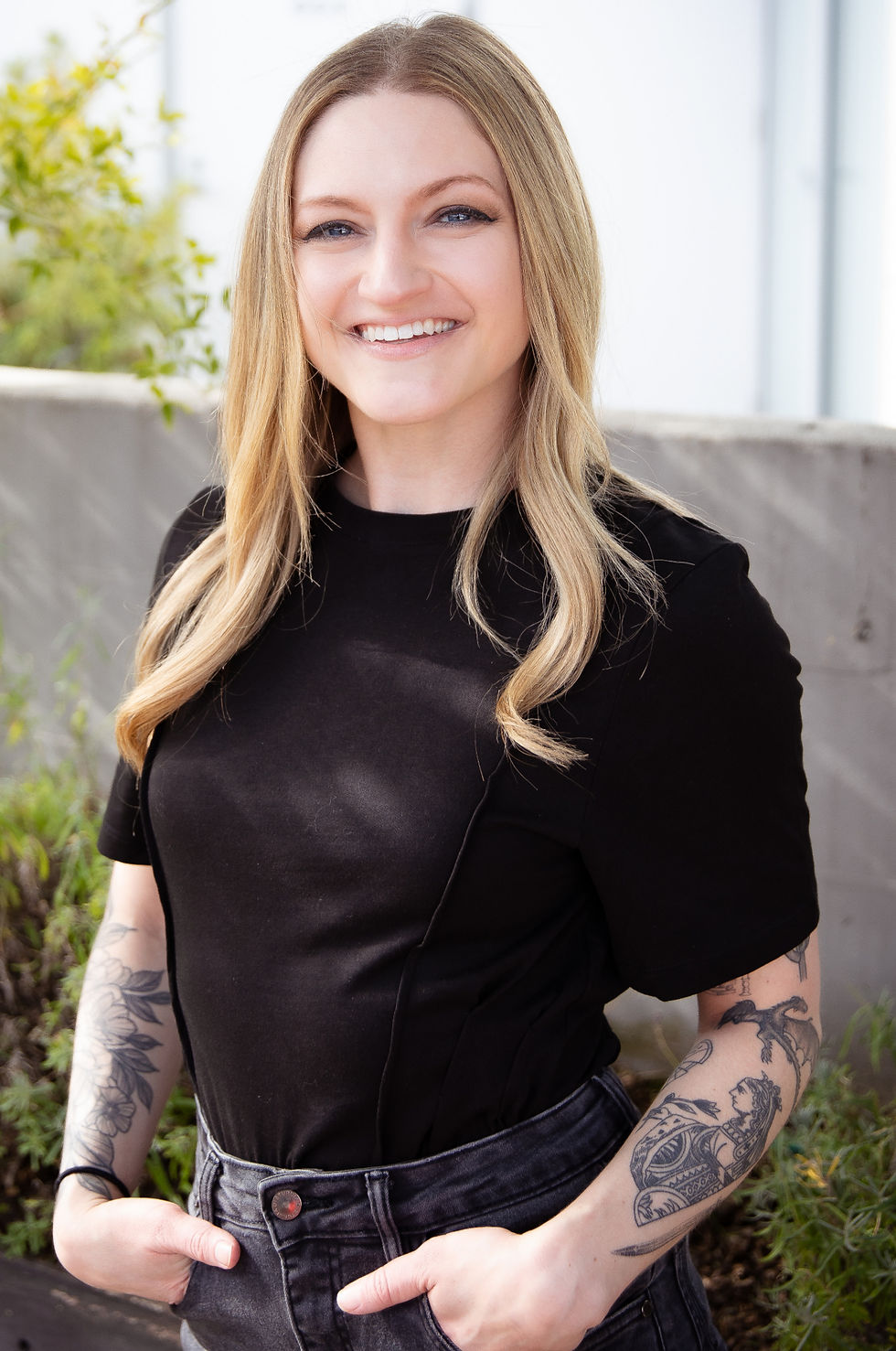
Dr. Jessica Hogan is a licensed clinical psychologist and founder of Neuron & Rose Psychological Services and The Divergent Clinician. She specializes in neurodiversity-affirming autism and ADHD assessment across the lifespan, with a focus on late-diagnosed and high-masking individuals. As an AuDHD psychologist, her work integrates lived experience, clinical expertise, and research on autistic therapists to help both clients and clinicians move from self-doubt to self-understanding.


Comments